
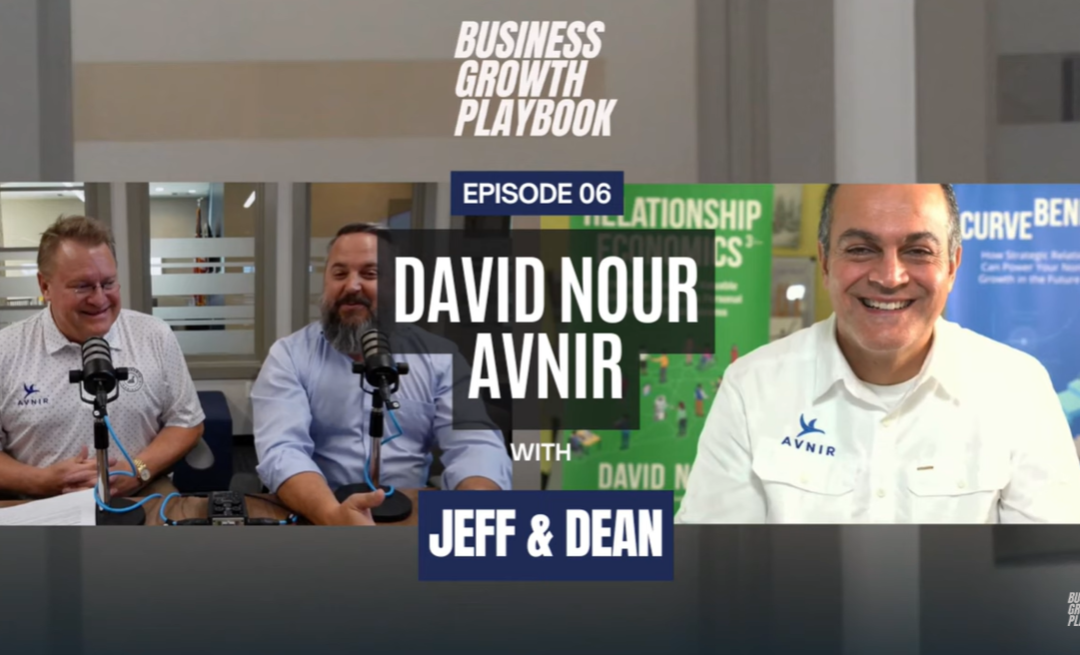
What Actually Works – Understanding that Relationships Drive Revenue
Most SMB sales teams don’t fail because they lack effort, talent, or ambition. They fail because the wrong type of problem is being solved first.
After years of working inside sales organizations, I’ve learned that sales breakdowns almost always fall into one of three categories. Each requires a very different role, mindset, and solution.
What is often missing—before any fix is applied—is a clear understanding of the relationships driving revenue.

1. Relationship Economics: Making the Invisible Visible
Before execution can be improved, before structure can be scaled, and before clarity can be restored, one question must be answered:
Do we actually understand the relationships driving our revenue?
Most SMBs rely heavily on relationships—but ma1. Relationship Economics: Making the Invisible Visible
Before execution can be improved, before structure can be scaled, and before clarity can be restored, one question must be answered:
Do we actually understand the relationships driving our revenue?
Most SMBs rely heavily on relationships—but manage them informally. Trust, influence, and access live in individual inboxes, contact lists, and memories. When those relationships are invisible, sales teams waste effort, leaders misread risk, and organizations confuse activity with progress.
Relationship economics is the discipline of understanding where trust exists, how influence flows, and which relationships truly matter to growth. It shifts sales from volume-based effort to intentional engagement.
This is where platforms like AVNIR add leverage.
- AVNIR provides a unified view of personal and professional relationships across systems,
- Makes relationship strength, change, and risk visible.
- It doesn’t replace sales execution—it informs it.
- Clarity Game Changer for Nurturing and Building Meaningful Relationship through with Relationship Touch Cadences
- Identifies your deepest and most valuable connections, stay informed on relationship changes, and nurture your network with automated reminders
- Boost productivity by focusing on the most valuable and relevant relationships, making informed decisions, and building meaningful, lasting professional relationships
- Once relationship truth is visible, leaders can accurately determine whether the real problem is execution, structure, or clarity.
The end result, Expanding the wallet share with existing customers, while assuring you capture some of those most important wins, NEW LOGOS !!!

2. Sales Growth Builder-in-the-Box: When Execution Is the Problem
Sales Growth Builder-in-the-Box work is needed when sales performance is inconsistent.
Deals stall for no clear reason. Top reps carry the number while others struggle. Training happens, but behaviors don’t change. Managers coach reactively instead of systematically.
This is not a strategy problem—it’s an execution problem.
Sales Growth Builder work focuses on:
- Assessing sales competencies and role fit
- Developing consultative selling and opportunity management skills
- Reinforcing those skills through weekly coaching tied to live deals
- Establishing clear expectations and scorecards
The Sales Growth Builder-in-a-Box’s job is to turn skills into habits and activity into consistency. Without this foundation, no strategy or playbook will stick.
The end result, building stronger skills through Training is transforming into driving Revenue Results.

3. Sales Playbook Growth Architect-in-a-Box Work: When Structure Is the Problem
Sales Playbook Growth Architect work is needed when effort exists but results don’t scale.
Sales reps sell different ways. Messaging changes by person or region. Onboarding takes too long. Best practices live in people’s heads instead of the organization.
This is not a motivation problem—it’s a structure problem.
Architect work focuses on designing a real sales operating system, not a static document:
- Clear ICPs, personas, and value propositions
- Defined sales stages with entry/exit criteria
- Role-based playbooks (SDR, AE, AM)
- Qualification models, handoffs, and deal strategy
- AI-enabled guidance that reinforces the system in real time
- Execution cadence and leadership accountability
The Architect’s job is to make sales teachable, repeatable, and scalable—so growth doesn’t depend on heroics, but there is a Playbook design for everyone and this needs conversation:
- The Standard Playbook – Create Clarity & Consistency
- The Advanced Custom Playbook – Personalize the System to Your Business
- Sales Growth Playbook Architect-in-a-Box – Build the Complete Sales Operating System
- The Sales Acceleration Framework – Execute, Improve & Scale
This Truly Complete Sales Operating System for SMB Growth regardless of what Playbook is built for you. It’s everything a growing business needs to build and sustain sales momentum.

4. Curious Sales Engineer-in-a-Box: Clarity Is the Problem
Curious Sales Engineer-in-a-Box work is needed when leaders feel something is wrong but can’t agree on what.
Owners see one reality. Leadership sees another. Sales has its own version. Customer-facing teams often see issues first—but lack a forum to surface them.
This is not an execution or structure issue yet—it’s a clarity problem.

Curious Sales Engineer-in-a-BOX work starts with disciplined discovery:
- Evaluating sales strategy, methodology, metrics, and organization
- Comparing perspectives across owners, leadership, sales, and support roles
- Identifying gaps, misalignment, and root causes
- Separating symptoms from actual constraints
The Engineer’s job is to eliminate guesswork before time, money, or headcount is invested.
Sometimes the right decision is to act. Sometimes it’s to pause. Sometimes it’s to do nothing—with confidence.

The Real Mistake
Most organizations don’t struggle because they lack solutions. They struggle because they apply the right solution to the wrong problem.
You can’t architect structure before execution is stable. You can’t coach execution when clarity is missing. And you shouldn’t invest in either until the truth—execution, structure, and relationships—is understood.
Sales growth becomes predictable when the right role is applied at the right moment.
That’s not selling harder. That’s building sales intelligently.nage them informally. Trust, influence, and access live in individual inboxes, contact lists, and memories. When those relationships are invisible, sales teams waste effort, leaders misread risk, and organizations confuse activity with progress.
Relationship economics is the discipline of understanding where trust exists, how influence flows, and which relationships truly matter to growth. It shifts sales from volume-based effort to intentional engagement.
This is where platforms like AVNIR add leverage.
- AVNIR provides a unified view of personal and professional relationships across systems,
- Makes relationship strength, change, and risk visible.
- It doesn’t replace sales execution—it informs it.
- Clarity Game Changer for Nurturing and Building Meaningful Relationship through with Relationship Touch Cadences
- Identifies your deepest and most valuable connections, stay informed on relationship changes, and nurture your network with automated reminders
- Boost productivity by focusing on the most valuable and relevant relationships, making informed decisions, and building meaningful, lasting professional relationships
- Once relationship truth is visible, leaders can accurately determine whether the real problem is execution, structure, or clarity.
The end result, Expanding the wallet share with existing customers, while assuring you capture some of those most important wins, NEW LOGOS !!!

2. Sales Growth Builder-in-the-Box: When Execution Is the Problem
Sales Growth Builder-in-the-Box work is needed when sales performance is inconsistent.
Deals stall for no clear reason. Top reps carry the number while others struggle. Training happens, but behaviors don’t change. Managers coach reactively instead of systematically.
This is not a strategy problem—it’s an execution problem.
Sales Growth Builder work focuses on:
- Assessing sales competencies and role fit
- Developing consultative selling and opportunity management skills
- Reinforcing those skills through weekly coaching tied to live deals
- Establishing clear expectations and scorecards
The Sales Growth Builder-in-a-Box’s job is to turn skills into habits and activity into consistency. Without this foundation, no strategy or playbook will stick.
The end result, building stronger skills through Training is transforming into driving Revenue Results.

3. Sales Playbook Growth Architect-in-a-Box Work: When Structure Is the Problem
Sales Playbook Growth Architect work is needed when effort exists but results don’t scale.
Sales reps sell different ways. Messaging changes by person or region. Onboarding takes too long. Best practices live in people’s heads instead of the organization.
This is not a motivation problem—it’s a structure problem.
Architect work focuses on designing a real sales operating system, not a static document:
- Clear ICPs, personas, and value propositions
- Defined sales stages with entry/exit criteria
- Role-based playbooks (SDR, AE, AM)
- Qualification models, handoffs, and deal strategy
- AI-enabled guidance that reinforces the system in real time
- Execution cadence and leadership accountability
The Architect’s job is to make sales teachable, repeatable, and scalable—so growth doesn’t depend on heroics, but there is a Playbook design for everyone and this needs conversation:
- The Standard Playbook – Create Clarity & Consistency
- The Advanced Custom Playbook – Personalize the System to Your Business
- Sales Growth Playbook Architect-in-a-Box – Build the Complete Sales Operating System
- The Sales Acceleration Framework – Execute, Improve & Scale
This Truly Complete Sales Operating System for SMB Growth regardless of what Playbook is built for you. It’s everything a growing business needs to build and sustain sales momentum.

4. Curious Sales Engineer-in-a-Box: Clarity Is the Problem
Curious Sales Engineer-in-a-Box work is needed when leaders feel something is wrong but can’t agree on what.
Owners see one reality. Leadership sees another. Sales has its own version. Customer-facing teams often see issues first—but lack a forum to surface them.
This is not an execution or structure issue yet—it’s a clarity problem.

Curious Sales Engineer-in-a-BOX work starts with disciplined discovery:
- Evaluating sales strategy, methodology, metrics, and organization
- Comparing perspectives across owners, leadership, sales, and support roles
- Identifying gaps, misalignment, and root causes
- Separating symptoms from actual constraints
The Engineer’s job is to eliminate guesswork before time, money, or headcount is invested.
Sometimes the right decision is to act. Sometimes it’s to pause. Sometimes it’s to do nothing—with confidence.

The Real Mistake
Most organizations don’t struggle because they lack solutions. They struggle because they apply the right solution to the wrong problem.
You can’t architect structure before execution is stable. You can’t coach execution when clarity is missing. And you shouldn’t invest in either until the truth—execution, structure, and relationships—is understood.
Sales growth becomes predictable when the right role is applied at the right moment.
That’s not selling harder. That’s building sales intelligently.
